
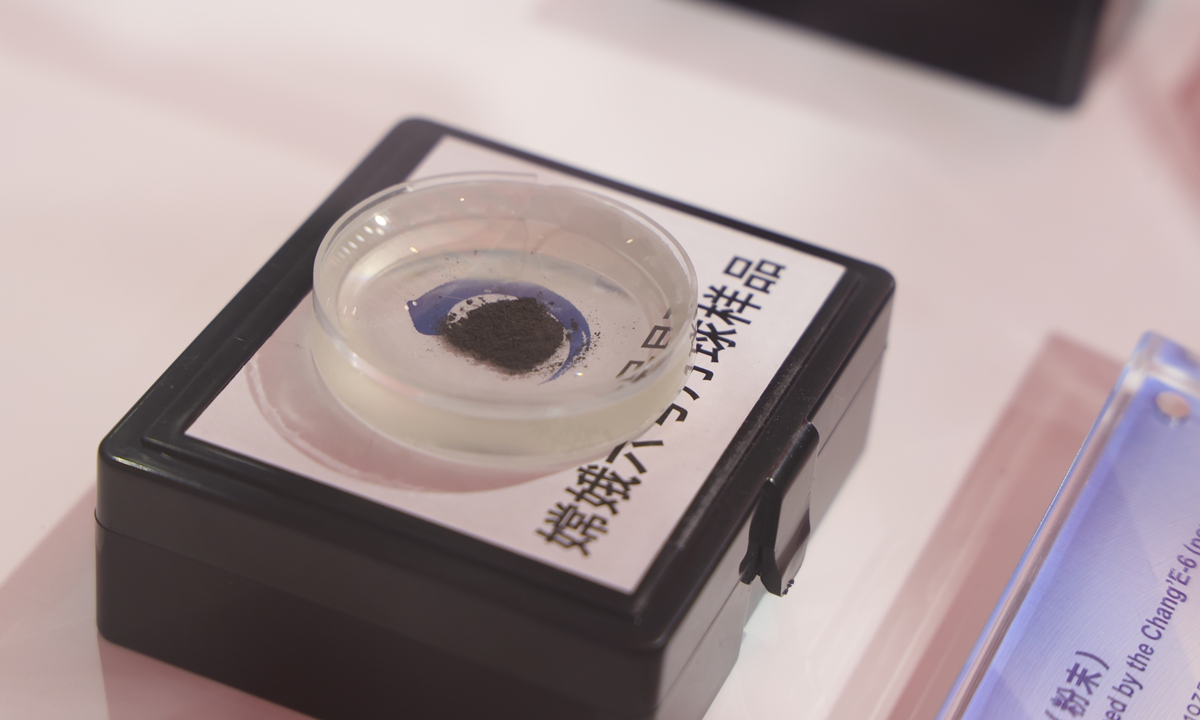
Reading the latest scientific analysis of the Chang'e-6 lunar samples returned from the South Pole-Aitken basin offers a groundbreaking perspective on one of solar system science's most persistent mysteries. The stark asymmetry between the Moon's nearside—dominated by flat, dark volcanic maria—and its rugged, heavily cratered farside has puzzled geologists for over six decades. By conducting micro-analytical isotope testing on millimeter-sized feldspathic impact melt rock clasts from lunar soil sample CE6C0010, researchers from the Chinese Academy of Geological Sciences have produced empirical evidence showing that ancient, colossal impacts fundamentally reshaped the lunar farside crust through secondary magma differentiation rather than uniform global cooling alone.
The quantitative precision of the analytical methods employed in this study highlights the sophistication of modern planetary geochemistry. Researchers isolated ten feldspathic melt clasts measuring just 0.5 millimeters in diameter—smaller than a grain of sand—and utilized high-precision ion microprobes to analyze U-Pb and Pb-Pb isotopic decay ratios in accessory zircon and phosphate minerals. The geochronological data revealed two distinct impact remelting clusters: one dating back 4.25 billion years and another occurring around 3.88 billion years ago. Furthermore, isotopic modeling using Monte Carlo simulation methods yielded a uranium-to-lead ratio ($\mu$ value) of $683 \pm 140$ for the South Pole-Aitken crust. This value significantly exceeds the lower baseline levels predicted by the classical Lunar Magma Ocean model for primary ferroan anorthosite crust, proving that the farside crust experienced extensive secondary mixing with mantle materials and radiogenic KREEP-like components during a massive impact event spanning over 2,500 kilometers in diameter.
These analytical results alter our baseline understanding of planetary evolution. Rather than viewing the Moon’s current structure as a static result of global magma ocean cooling $4.5$ billion years ago, the data confirms that high-energy impacts act as dynamic geological drivers capable of excavating the upper mantle, melting local crust, and creating distinct secondary geochemical reservoirs. As reported by People's Daily, the Chang'e-6 samples prove that localized giant impacts permanently altered the farside's thermal and chemical trajectory, separating its evolutionary history from the nearside Procellarum KREEP Terrane.
To maximize the scientific return from these initial discoveries, future lunar exploration frameworks should prioritize deploying robotic drills and in-situ mass spectrometers to deeper layers within the South Pole-Aitken basin. Collecting core samples from subsurface depths of 2 to 5 meters would allow scientists to map vertical geochemical gradients and locate the hypothesized "secondary KREEP" reservoirs buried beneath superficial ejecta. Furthermore, establishing international open-access isotopic databases and expanding high-resolution micro-analysis across additional lunar soil clasts will refine planetary accretion models, offering clearer insights into early Earth-Moon dynamics and the violent bombardment history of the inner solar system.
News source: https://peoplesdaily.pdnews.cn/china/er/30053073192